What We Owe the Future
I. The Mountain
There is a place on Earth where humanity quietly waits for the future. It isn't a capital city or a cathedral. It isn't the headquarters of the world's largest technology company, nor the campus of a famous university. In fact, It’s not a place where history appears to be unfolding at all.
It is a mountain.
Far beyond mainland Norway, where the Arctic Ocean swallows the horizon and the seasons themselves seem to exist in greyscale, lies the Svalbard archipelago. For nearly four months each winter, the sun never rises above the horizon. Then, in summer, it refuses to set. Black mountains emerge from vast sheets of snow and ice like the weathered backs of giant whales. Polar bears roam where roads are less a necessity than a luxury. The wind has spent millennia sculpting the rock into something that feels older than memory itself.
It is an unforgiving place, and perhaps that is precisely why it was chosen.
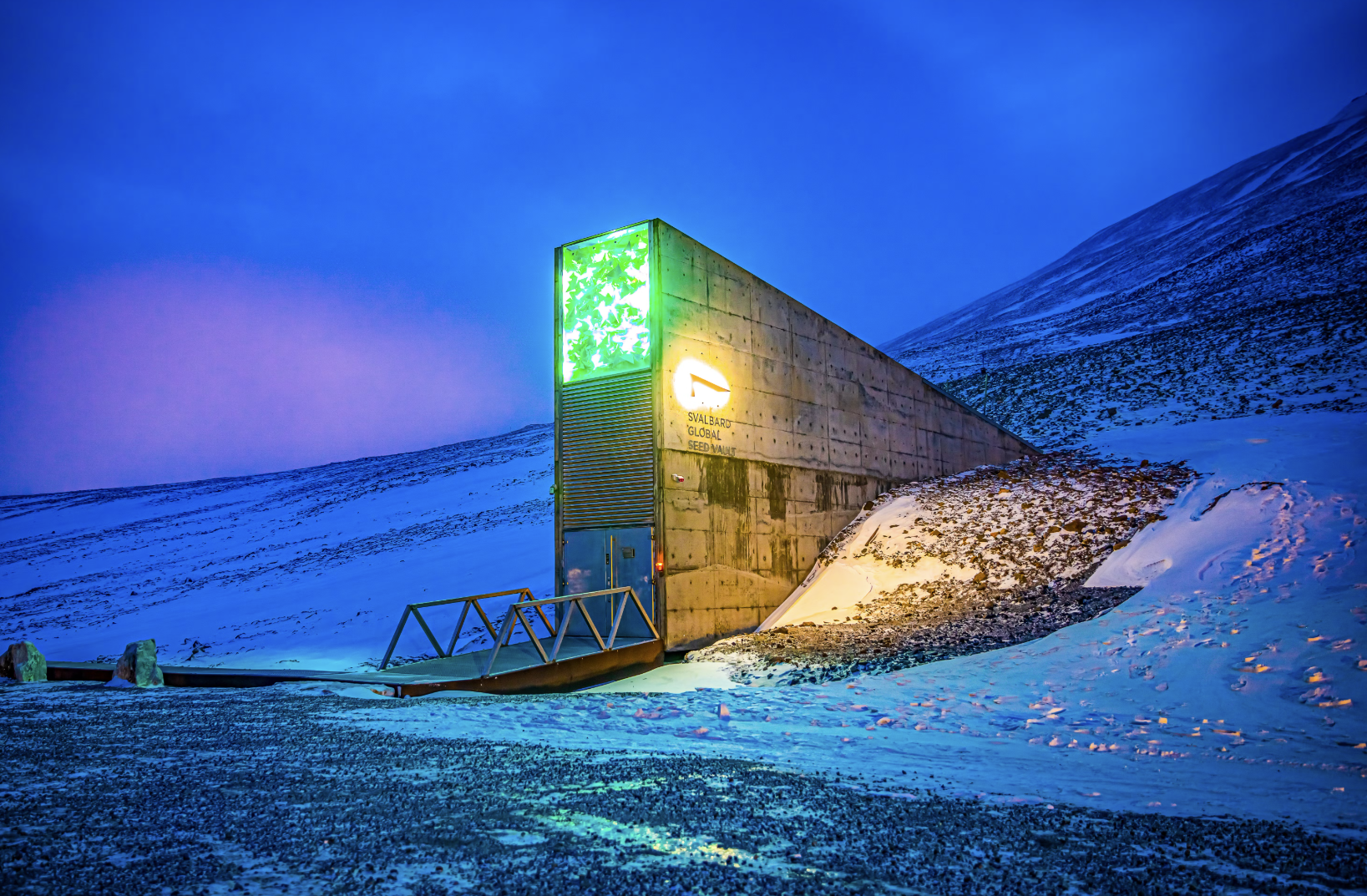
If you were driving through the valley, you might not even notice it. Emerging from the frozen mountainside is a simple wedge of brutalist concrete, understated to the point of invisibility. There are no marble columns, no soaring glass atrium, no architectural flourishes announcing its importance. It sits quietly against the landscape, as though, somehow, it has always belonged there.
Beyond that modest entrance, more than four hundred feet inside the mountain, steel doors open into a network of chambers carved through ancient sandstone and protected by Arctic permafrost. Even if the electricity were to fail inside this vault, the mountain itself would continue safeguarding what lies within. Nature, which so often threatens what humanity creates, has instead become its guardian.
Inside rest more than 1.4 million seed samples gathered from nearly every nation on Earth. Wheat that has fed civilizations for thousands of years. Rice cultivated across Asia. Maize from the Americas. Sorghum from Africa. Tiny capsules of possibility, each carrying generations of adaptation, resilience, and survival. Together they represent thousands of crop species and centuries of agricultural knowledge, preserved so that no war, flood, famine, political upheaval, or human mistake can erase them forever.
Many people call this place the Doomsday Vault, though I find that name to be inaccurate. Affixing “doomsday” to anything imagines catastrophe when the people who built the vault imagined continuity. The real motivation for this place was hope.
The Svalbard Global Seed Vault is not a monument to the end of the world. It is a promise made to the next one.
Think about what had to happen before someone could build a place like this.
Someone had to imagine a farmer living two hundred years from now. A scientist confronting a disease that has not yet appeared. A child growing food in a climate none of us will ever experience. They had to care deeply about people whose names they would never know, who would speak languages they would never hear, and who would inherit a world they would never see. Essentially, a profound moment of radical empathy.
Then they asked a remarkably simple question.
What can we preserve today that might help them tomorrow?
That one question transformed a mountain into an act of stewardship. It became a declaration that some things are too valuable to entrust to chance, and that the measure of a civilization is not simply what it creates, but what it chooses to carry forward.
I have found myself thinking about that mountain for years. Not because I am fascinated by seeds. The dead plants on my patio would indicate that I’m very much NOT someone who should be concerned by seeds or their progeny.
No, I’m fascinated by the Svalbard Global Seed Vault because I’m in awe of the kind of civilization that builds a place like it.
There is something profoundly hopeful about a society willing to invest enormous resources in people who do not yet exist. There is something deeply moving about an institution whose greatest success may be that it is never needed, yet whose presence quietly reassures the future that someone, somewhere, was thinking of them.
The more I have reflected on Svalbard, the more I have come to believe that the vault is not really about agriculture. It is about stewardship. It is about humility before time. It is about recognizing that every generation inherits treasures it did not create and bears a responsibility to pass them forward, intact if possible, enriched if it can.
That realization has lingered with me for years because it almost inevitably leads to another question. If humanity was wise enough to build a mountain to preserve the genetic memory of the plants that sustain our bodies, what have we built to preserve the experiences that sustain our civilization?
Because every day, without ceremony or headlines, libraries disappear.
Not buildings filled with books, but the invisible libraries carried within ordinary people. A grandfather's stories about growing up during the Depression. A mother's quiet wisdom about raising children. The memories of a refugee, the humor of a mechanic, the perspective of a teacher, the courage of a nurse, the accumulated understanding that can only be earned by living a life.
Every person carries a collection unlike any that has ever existed before, and every day, another one quietly closes forever. Perhaps we have become so accustomed to that loss that we no longer recognize it for what it is. Or, perhaps, we have simply never possessed the tools to imagine another way.
History occasionally changes not because humanity discovers something new, but because it begins asking a better question.
I have come to believe that this is one of those questions.
II. Thinking in Centuries
Every founder is asked the same question.
"Where do you see your company in five years?"
It's a reasonable question. Businesses need plans. Investors deserve roadmaps. Employees want to know they're joining something with momentum, not the illusion of momentum. We learn to answer with confidence. We talk about products, customers, partnerships, revenue, hiring, and growth. We describe milestones that can be measured, charts that trend upward, and futures that fit neatly onto presentation slides.
A company that cannot survive the next five years has little chance of contributing to the next fifty. And yet, I have always found my mind drifting somewhere much farther away.
Whenever someone asks me where I hope to take a company, I find myself wondering what it might become after everyone in the room is gone.
Not because I expect to see that future. I won't. None of us will.
But there is something deeply human about imagining a future we will never personally experience. It is one of the defining characteristics of our species. We plant oak trees knowing someone else will sit beneath their branches. We restore coral reefs knowing someone else will swim above them. We establish scholarships that will educate students whose names we will never know. We build trails, bridges, observatories, and hospitals with the quiet understanding that their greatest service will be rendered to strangers.
Perhaps that is what separates institutions from products. Products solve today's problems. Institutions become tomorrow's inheritance.
History is filled with examples of people who thought this way.
The builders of Europe's great cathedrals knew they would never see the roofs completed. Construction often stretched across generations, sometimes lasting more than a century, or, however long the construction of the Sagrada Familia has been inching forward. A stonemason might spend his entire working life carving arches or columns for a building that his grandchildren would one day help finish. The satisfaction was never meant to come from seeing the completed structure. It came from knowing they had become part of something that extended beyond a single lifetime.
The same is true of universities. When the first scholars gathered in Bologna, Oxford, and Paris, they could not possibly have imagined the discoveries that would emerge from those institutions hundreds of years later. They were not building for themselves. They were creating places where future minds could ask questions they themselves would never think to ask.
Libraries were built with the same faith. The great collections of history were assembled one manuscript at a time, often over centuries, by people who understood that preserving knowledge was not a service to the present. It was a gift to the future. Every book placed on a shelf was an act of confidence that someone, someday, would come looking for it.
The remarkable thing about these institutions is that none of them began with certainty. They began with belief. Belief that knowledge mattered. Belief that beauty mattered. Belief that learning mattered. Belief that the future was worthy of investment, even if the return on that investment could never be measured within a single lifetime.
That way of thinking feels increasingly uncommon.
We have become extraordinarily good at optimizing for the immediate. Public companies report earnings every quarter. Election cycles reward short-term victories. Social media compresses attention into moments measured in seconds. Technology often celebrates disruption over durability, novelty over permanence, speed over stewardship.
There is nothing inherently wrong with moving quickly. Many of humanity's greatest breakthroughs have depended upon urgency. But civilization itself has never been built in a hurry.
The institutions that shape centuries are almost always created by people willing to think beyond them. I believe that every generation receives two inheritances. The first is the world it is given. The second is the responsibility to decide what should survive after it is gone.
One is received.
The other is earned.
The mountain in Svalbard exists because one generation refused to consume its inheritance without protecting it. They recognized that the seeds they preserved did not belong exclusively to them. They belonged equally to the generations that would follow.
That idea has stayed with me because it quietly changes the way I think about building companies. For years, I assumed the greatest ambition a founder could have was to build a successful business. Now I'm no longer sure that's true. I think the greater ambition is to build something that eventually stops belonging to its founders altogether. Something that becomes trusted, useful, and enduring enough that society begins to think of it not as a company but as part of civilization's infrastructure.
Libraries made that transition. Universities made that transition. Museums made that transition. Public parks, archives, observatories, and seed vaults made that transition. Each began as someone's improbable idea. Each became something humanity could no longer imagine living without.
When I think about the future, that is the horizon I find myself looking toward. Not five years. Not ten. A century. Two centuries. Perhaps longer. Because somewhere beyond the spreadsheets, the product roadmaps, and the quarterly goals lies a much more interesting question.
What if the most important thing we build is not something that succeeds in our lifetime, but something that continues to serve humanity long after our names have been forgotten?
III. Civilization’s Blindspot
Every civilization, whether it realizes it or not, reveals its values by what it chooses to preserve.
When archaeologists uncover the remains of an ancient culture, they do not simply find objects. They find priorities. A temple suggests that faith mattered. An observatory reveals a fascination with the heavens. Irrigation canals speak of agriculture, survival, and cooperation. Libraries tell us that knowledge was considered precious enough to protect against fire, war, and time itself.
The things a civilization saves become the things it hopes will outlive it.
Our own age is no different.
Never before has humanity possessed such extraordinary tools for preservation. We can digitize entire libraries in a matter of days. Satellites map every corner of the planet with astonishing precision. Museums scan priceless artifacts in three dimensions. Scientists preserve genetic material from endangered species. We back up financial systems, scientific research, medical records, software, films, photographs, and works of art across continents so that no single disaster can erase them. These are remarkable achievements.
They are among the quiet triumphs of modern civilization because they represent something deeper than technology. They represent humility. They acknowledge that what we inherit does not belong exclusively to us. It belongs equally to those who come after us.
And yet, the more I think about everything we have chosen to preserve, the more one omission becomes impossible to ignore. We have become exceptionally good at preserving information, but we have never built an institution dedicated to preserving human experience itself.
Information tells us what happened. Experience teaches us how it felt.
History can tell us that a family crossed the Atlantic in 1892. Only that family can explain what it was like to stand on the deck of the ship, watching their homeland disappear beneath the horizon, wondering whether they would ever see it again.
A medical journal can describe a disease in extraordinary detail. Only a patient can explain what it felt like to hear the diagnosis.
An economics textbook can explain the Great Depression. Only someone who lived through it can tell you what it was like to hear the silence around a dinner table when there simply wasn't enough food.
Civilization has always depended upon this second kind of knowledge, but it simply never had a reliable way to keep it.
For almost all of human history, experience has been passed forward through conversation. Parents taught children. Elders taught communities. Grandparents became living libraries whose shelves existed only in memory. Wisdom survived because someone took the time to tell a story one more time before bed, one more time around the dinner table, one more time while walking through a field or fixing an old engine in the garage.
It was a beautiful system, but it was also extraordinarily, painfully, fragile.
Every person who has ever lived carried within them a perspective that had never existed before and would never exist again. Every life became a unique combination of place, time, relationships, failures, victories, disappointments, humor, curiosity, grief, and love. No two people have ever walked precisely the same path through the world.
And every time one of those people died, an entire way of seeing the world disappeared with them. But we rarely think about loss that way. Sure, we mourn the person. We inherit the photographs. Perhaps we are fortunate enough to remember the sound of their voice. But the vast majority of what made them who they were quietly vanishes. Not because anyone wanted it to. No, because there was nowhere for it to go.
There is a sentence that has echoed through almost every family that has ever existed.
"I wish I had asked them."
I wish I had asked my grandmother how she met my grandfather.
I wish I had asked my father what frightened him when he was young.
I wish I had asked why our family always gathered in that little house by the lake.
I wish I had asked where that tradition began.
It is one of the saddest sentences in the human language because it always arrives a day too late.
And yet I don't think those regrets are really about memory.
I think they are about access.
For thousands of years, we have accepted the disappearance of lived experience as though it were one of nature's unchangeable laws. We assumed that every generation would inevitably begin with only fragments of the one before it. A few stories. A few photographs. A handful of heirlooms. The rest would simply dissolve into history.
Perhaps that was inevitable.
That is, until now.
Every so often, humanity invents a tool that changes not only what we can do, but what we believe is possible. The printing press changed the preservation of ideas. Photography changed the preservation of moments. Recorded sound changed the preservation of voices. The internet changed the preservation of knowledge. For the first time, artificial intelligence gives us the possibility of preserving something more elusive than any of those. Perspective. Not perfectly. Not completely. No technology will ever capture the full richness of a human life.
But perhaps it doesn't have to.
A library has never contained every book. A museum has never displayed every work of art. An archive has never preserved every document. The purpose of an institution is not perfection. It is stewardship.
I stopped asking how artificial intelligence might replace human beings, and I started asking how it might help us preserve what has always made us human in the first place. Because if every civilization is ultimately remembered by what it chose to save, then perhaps the greatest blind spot in the history of civilization has not been a failure of technology.
It has been a failure of imagination. We simply never imagined that ordinary human lives were worthy of becoming part of our permanent inheritance. But I believe they are and always have been. Further, I believe history will one day judge us, at least in part, by whether we recognized that truth while we still had the opportunity to do something about it.

IV. The Girl in 2247
Close your eyes for a moment and imagine a Tuesday afternoon in the year 2247.
Not the cities.
Not the technology.
Not whatever extraordinary machines humanity may have built by then.
Imagine something much quieter.
School has just ended, and a twelve-year-old girl is sitting at the kitchen table finishing her history assignment. Her teacher has asked each student to interview someone who lived during the early decades of the twenty-first century. Some of her classmates have chosen presidents, inventors, astronauts, artists, and scientists. The people whose names have survived because history deemed them important.
She chooses her great-great-great-grandmother.
Not because she was famous, but because she was family. Her great-great-great-grandmother never appeared in history books. She never held public office. She didn't discover a new planet or invent a revolutionary technology. She raised children. She worked hard. She worried more than she should have. She laughed at her own jokes. She burned dinner once in a while. She loved the ocean. She believed handwritten thank-you notes still mattered. She had an annoying habit of finishing other people's sentences.
She lived what history would have once called an ordinary life, but the little girl doesn't think of it that way. To her, this is simply where history lives. So, she begins asking questions.
"What did the world feel like when artificial intelligence first became part of everyday life?"
"Were you scared?"
"What surprised you the most?"
"What did you think my world would look like?"
Her ancestor talks about learning to use the first generation of truly conversational computers. She laughs about how people once carried phones in their pockets instead of wearing unobtrusive interfaces. She describes the strange feeling of watching the first autonomous cars appear on neighborhood streets. She talks about the pandemic that reshaped her generation, about the uncertainty, the loneliness, the unexpected kindness of neighbors, and the profound appreciation people developed for simply sitting around the same dinner table together again.
Then the questions become more personal.
"What were you like when you were my age?"
"What did you argue with your parents about?"
"What made you happiest?"
"What mistake taught you the most?"
"What were you afraid of?"
There are pauses before some answers. Laughter before others. Stories that begin in one place and somehow end somewhere entirely different.
The little girl notices things that no history book could ever preserve. The cadence of her ancestor's voice. The smile that always appears before she tells a story about her brother. The way she looks out the window whenever she speaks about people she loved who passed before their time. The quiet confidence that only arrives after decades of discovering that life rarely unfolds according to plan, and that somehow, despite everything, it can still become beautiful.
Without realizing it, the little girl is inheriting something much more valuable than information. She is inheriting perspective.
For centuries, education has been built upon facts. Dates. Names. Places. Events. All of those things matter. But facts have always been only the skeleton of history. Experience is what gives it a heartbeat. History suddenly ceases to be something that happened to strangers. It becomes something lived by people who worried, laughed, stumbled, hoped, and loved in ways that feel astonishingly familiar. That changes more than education. It ignites empathy.
Imagine a medical student learning compassion not only from textbooks, but from thousands of conversations with patients describing what illness actually felt like. Imagine an architect learning from the reflections of builders who spent their lives shaping cities. Imagine a young parent seeking advice from generations of mothers and fathers who discovered, each in their own imperfect way, that no one is ever fully prepared. Imagine diplomats studying not only the treaties that ended wars, but the memories of the civilians who survived them. Imagine entrepreneurs learning resilience from people whose businesses failed before they eventually succeeded. Imagine children growing up believing that wisdom is not scarce because the accumulated experience of humanity has become part of the world they inherit.
This is not about replacing teachers, or parents, or books. It is about expanding the conversation that civilization has always been having with itself.
For thousands of years, each generation has begun the same journey with only fragments of the one before it. A handful of stories. A few photographs. Perhaps a journal tucked into a drawer or a faded recording discovered in an attic. What if the next generation inherited something richer? What if wisdom no longer disappeared simply because time moved forward? What if history became less like a museum and more like a conversation?
Perhaps the greatest gift we could ever leave the future is not a more intelligent machine. Perhaps it is a world in which no child ever has to begin again with silence. Perhaps every generation deserves to inherit not only our discoveries, but our perspective. Not only the answers we found, but the questions that shaped us. Not only the monuments we built, but the humanity that inspired them.
If that future ever comes to pass, the little girl in 2247 will never think of it as remarkable. She won't marvel at the fact that she can speak with someone who lived centuries before she was born. She'll simply wonder why anyone ever thought history was supposed to be silent.
V. The Archive of Living Experience
If we can imagine that future, then another question naturally follows.
Who will build it?
Every institution begins long before the first stone is laid. It begins as an idea that quietly refuses to let go. Someone imagines a library before there are shelves. Someone imagines a university before there are classrooms. Someone imagines an observatory before the first telescope points toward the night sky. Institutions are always built twice. They are first constructed in the imagination, and only later in brick, steel, concrete, or code.
Perhaps this is one of those moments.
For years, I searched for the right language to describe what I hoped might someday exist. Calling it a product always felt too small. Calling it a platform made it sound temporary. Even calling it an archive seemed incomplete, because archives tend to preserve documents. What I kept imagining was something much more alive.
Eventually, I settled on a name.
ALEX.
The Archive of Living Experience.
The name is an intentional tribute to the Library of Alexandria, one of history's greatest symbols of intellectual ambition. The scholars who imagined Alexandria understood something profound: knowledge scattered is knowledge vulnerable. To preserve civilization, they believed, humanity first had to gather its understanding in a place where it could endure for generations.
ALEX begins with the same conviction, but it asks civilization to preserve something different. Not merely what humanity knows. Who humanity is.
Imagine, for a moment, what that really means. Not a database. Not a social network. Not another destination competing for attention. An institution. A place whose purpose is to collect, preserve, steward, and pass forward the lived experience of humanity itself.
Every voice.
Every culture.
Every language.
Every generation.
Not because every story will change the world, but because together they explain the world.
History has always been written from the top down. Kings. Queens. Presidents. Generals. Industrialists. The people who stood closest to power.
Yet civilization has always been built from the bottom up. It was built by teachers who inspired children they would never know as adults. By nurses who quietly comforted frightened patients through long nights. By immigrants who crossed oceans carrying little more than hope. By carpenters, farmers, scientists, artists, mechanics, musicians, volunteers, grandparents, and neighbors whose names rarely appeared in newspapers, yet whose daily choices shaped the lives around them in ways history almost never records.
When we speak about preserving humanity, these are the people I think about. Not because they are exceptions, but because they are the rule. Civilization is not the story of remarkable people. It is the accumulated story of ordinary lives. That is why I believe the next great archive should not be selective.
It should be expansive.
Not because every conversation carries equal historical significance, but because every life contributes something that has never existed before and will never exist again. Every person develops a unique way of seeing the world, shaped by their family, their culture, their failures, their triumphs, the era into which they were born, and the countless quiet moments that never become history, yet somehow become wisdom.
Those perspectives are among humanity's most valuable resources.
Today, we invest enormous effort preserving biodiversity because resilient ecosystems depend upon diversity. We preserve thousands of languages because each contains ideas that cannot be translated perfectly into another. We protect works of art because they reveal ways of seeing the world that would otherwise disappear.
Human perspective deserves the same stewardship.
The diversity of human experience may be every bit as important as the diversity of our forests, oceans, crops, and cultures. Once a unique perspective disappears forever, it can never truly be recreated.
That is why I believe ALEX should not belong to a company. Nor to a government. Nor to any single nation.
If it is ever built, it should ultimately belong to humanity itself.
Its mission should be as enduring as the institutions that inspired it. To preserve not only voices, but understanding. Not only memories, but meaning. Not only stories, but the extraordinary diversity of ways in which human beings have learned to love, build, discover, endure, forgive, create, and hope.
Perhaps that sounds impossibly ambitious. But, as we know, history has a habit of making ambitious ideas sound obvious in retrospect.
There was a time when public libraries seemed unrealistic. When universal education felt unattainable. When preserving millions of seeds beneath an Arctic mountain sounded unnecessary. When the idea of storing humanity's knowledge in machines connected across the globe belonged more to science fiction than engineering.
The future often arrives disguised as an unreasonable idea. Perhaps this is one of them.
I don't know whether ALEX will take twenty years to build. Or fifty. Or a century. Perhaps no single company should ever finish it. Perhaps every generation should. After all, the greatest institutions are never truly completed. They are inherited. They are cared for. They are expanded by people who understand that they are temporary stewards of something that belongs equally to the past and the future.
That is the future I find myself thinking about when people ask where I hope Reflekta will be five years from now. The honest answer is that I hope we are helping families preserve the voices they love. But if you ask me where I hope the journey ultimately leads, my answer reaches much farther than a business plan.
I hope we contribute the first stones. I hope others add thousands more. And I hope that, centuries from now, no one remembers who first imagined ALEX. Because the greatest institutions never become famous for their founders. They become indispensable for the generations they quietly continue to serve.
VI. What We Owe the Future
Every generation inherits a world it did not build.
The language we speak was shaped long before we were born. The roads we travel were laid by hands we will never shake. The books that formed our thinking, the discoveries that extended our lives, the music that moved us, the freedoms we often take for granted, all arrived as gifts from people whose names we may never know.
Civilization has always been an act of inheritance.
Every generation receives the accumulated work of countless others and, whether it realizes it or not, accepts a quiet responsibility. We are not simply beneficiaries of the past. We become its stewards. The question is never whether we will leave something behind. The question is what we will choose to carry forward, and what we will allow to disappear.
That responsibility feels especially significant today.
Never before has humanity possessed so much knowledge, or so many tools for preserving it. We can duplicate information almost instantly and distribute it across continents. We can protect scientific discoveries, works of art, historical records, and the genetic diversity of the crops that sustain us. We have become extraordinarily capable of safeguarding the products of human civilization.
But civilization has never been built by knowledge alone. It has always been built by people.
By the conversations between parents and children that quietly shaped another generation. By teachers who believed in students before they believed in themselves. By neighbors who showed up during difficult seasons without being asked. By immigrants who carried traditions across oceans. By craftsmen who spent decades mastering skills that could not be learned from diagrams alone. By grandparents who became the living memory of a family, preserving stories that no institution had ever thought to collect.
These are not the margins of history. They are its foundation.
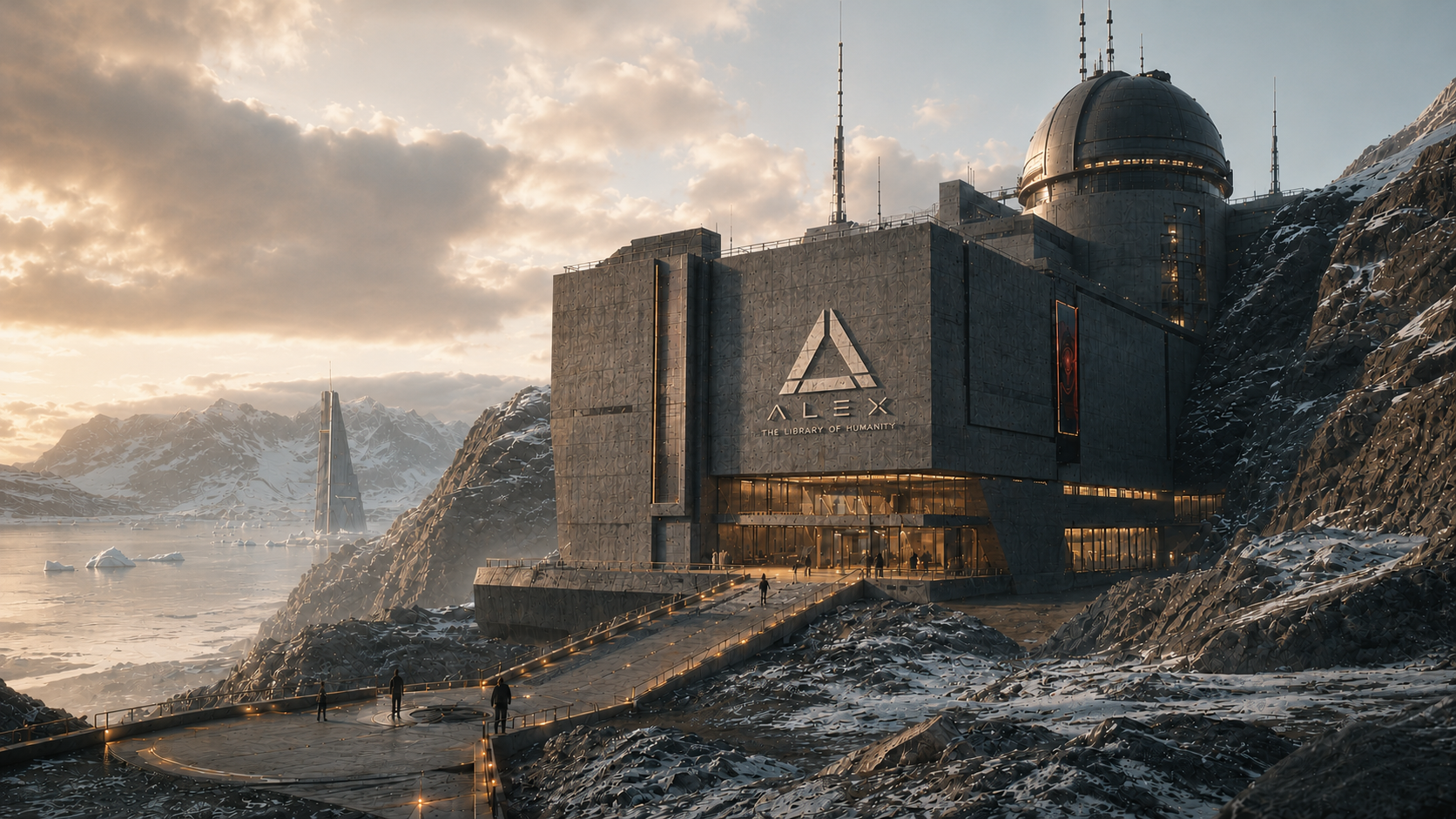
Perhaps that is why I keep returning, in my mind, to a mountain in the Arctic. Most days, nothing happens there. No crowds gather outside its entrance. No breaking news reports announce another ordinary day of successful preservation. The mountain simply waits, quietly fulfilling the purpose for which it was built. Hidden beneath stone and permafrost rests a collection of seeds that most of us will never see and, if history is kind, will never need. There is something profoundly beautiful about that. Its success is measured not by attention, but by endurance. Not by what it does today, but by what it makes possible tomorrow.
I wonder whether the greatest institutions all share that quality.
They become so woven into the fabric of civilization that people eventually stop thinking about them. We don't marvel each morning at the fact that libraries exist. We don't pause in amazement every time a university opens its doors or an archive preserves another document. They have become part of the quiet infrastructure of human progress, serving generation after generation with little expectation of recognition.
Perhaps the most meaningful things we build are the ones that eventually stop feeling remarkable. Perhaps they simply become essential.
I sometimes imagine another mountain.
Not because humanity needs another monument, but because every civilization eventually decides that certain things are too precious to lose.
Perhaps somewhere, decades or centuries from now, there will be a place whose purpose is not to preserve seeds, but stories. A place where the voices of humanity are cared for with the same seriousness that previous generations reserved for books, works of art, and scientific discovery. A place where the accumulated perspective of billions of lives is protected not because each individual story changed the course of history, but because together they explain what history actually was.
And, while I’d hope people would access it via their home computers or mobile phones, my guess is that most people may never visit it.
Children might pass its entrance without realizing what rests beneath their feet. Travelers may see only concrete emerging from stone, unaware that inside lives the laughter of grandparents, the wisdom of teachers, the resilience of immigrants, the reflections of scientists, the humor of mechanics, the songs of families, and the countless ordinary moments that quietly became civilization.
If that place ever exists, I hope people won't think of it as a technological achievement, because technology has always been temporary. I hope they think of it as an act of stewardship.
Because stewardship has never been about preserving the past for its own sake. It is an expression of faith in the future. It is a way of telling generations we will never meet that their lives matter to us, even across the impossible distance of time.
One day, children not yet born will inherit whatever world we leave behind. They will face problems we cannot imagine with tools we cannot predict. They will ask timeless questions in entirely new circumstances. How do I build a meaningful life? How do I recover from loss? What does courage look like? How do I love well? How do I become someone worthy of the trust others place in me?
Every generation has searched for answers to those questions. Every generation has discovered a few. The tragedy is not that humanity has failed to accumulate enough wisdom. The tragedy is how much of that wisdom has quietly disappeared with the people who carried it.
Perhaps our generation has been given an opportunity unlike any before it. Not simply to create more powerful technologies. Not simply to build more intelligent machines. But to become better ancestors.
To recognize that every ordinary life contains something worthy of preservation. To build institutions that measure success not only by the value they create today, but by the value they continue creating centuries from now. To leave behind more than infrastructure, information, and innovation. To leave behind ourselves, our perspective, our compassion, our mistakes, and our hard-earned understanding of what it means to be human.
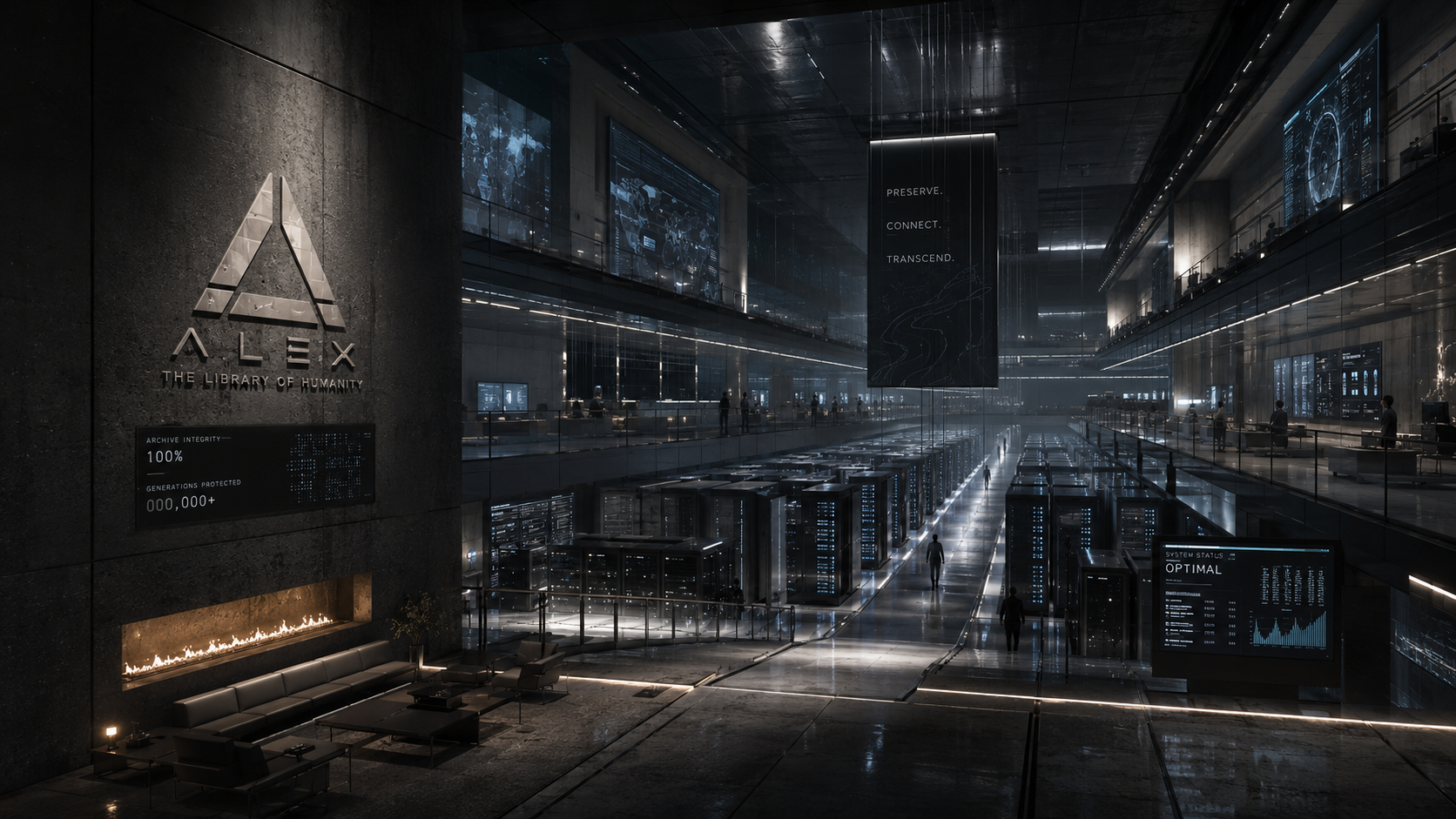
If we succeed, the generations that follow us may never know our names, which sounds about right to me. The builders of the greatest institutions in history are rarely remembered as individuals. Their legacy lives not in monuments to themselves, but in the lives made better by those who imagined a future beyond their own.
Perhaps that has always been civilization's highest calling. To care for people we will never meet. To prepare a world we will never see. To plant trees whose shade we will never enjoy. To preserve stories whose meaning will not fully reveal itself for generations.
In the end, I believe every civilization is remembered not only for what it built, but for what it refused to lose. That is the future I hope we choose. That is the inheritance I hope we leave. And perhaps, if we prove worthy of it, that will become the quiet promise our generation makes to every generation that follows.