The Value of Things That Take Too Long
The first guy who invented the wheel absolutely got yelled at. Not politely questioned. Not peer reviewed. Picked apart by his friends and cave neighbors. I imagine a group of very serious, extremely committed square-object enthusiasts standing around a pile of rocks while this lunatic rolls a circle past them with the confidence of someone who can explain in detail why those glowing orbs in the night sky aren’t demons here to kill them all.
“Absolutely not,” says one of them, arms crossed. “We drag things. That is how things move. You drag them. It builds character.”
Another chimes in, “My father dragged things. His father dragged things. You’re telling me this… circle is better than generations of dragging?”
Because that’s the pattern. Every time we invent something that makes life easier, faster, or more efficient, there’s a moment, sometimes brief, sometimes prolonged, where we collectively panic that we’ve just ruined everything. The printing press showed up and suddenly there was a room full of monks who had spent twelve years painting a single ornate “B” into a manuscript looking at Gutenberg like he just keyed their horse and buggy (or whatever Monks use to get around. I’m really not quite sure.)
“You’re telling me this thing can produce books… quickly?” one monk says, gently placing down a gold-leaf brush he’s spent a good decade holding onto. “This contraption is an affront to God!”
Another monk, chimes in: “If anyone can read… what happens to… us?”
Fast forward a few centuries and the internet arrives, and we all become experts in doom. This is it, we say. This is the thing that ends attention spans, destroys human connection, collapses civilization, and replaces meaningful work with… whatever it is we’re doing when we fall into a twelve-minute YouTube spiral about a guy restoring a 1930s toaster.
But yet, we still read. We still write. We still gather. We still make things. In fact, in many ways, we make more things, not fewer.
Which brings us to AI, the current object of our collective existential dread. AI is going to take the jobs. AI is going to write the books. AI is going to compose the music. AI is going to do everything, and we will be left sitting in a chair, staring at a wall, occasionally clapping for a soulless robot that thinks it’s Gershwin.
Or, and stay with me here, something else might happen.
What if AI doesn’t eliminate craftsmanship, but restores it?
What if, by removing the endless pile of mundane, repetitive, soul-draining tasks that fill our days, AI actually hands us back the one thing we’ve been quietly missing for decades: time?
Time to make things that are slow. Time to make things that are imperfect. Time to make things that are, in the best possible way, unnecessary. Because somewhere along the line, we optimized everything. We optimized production. We optimized speed. We optimized cost. We optimized convenience. We optimized so aggressively that we accidentally optimized the soul out of a lot of what we make.
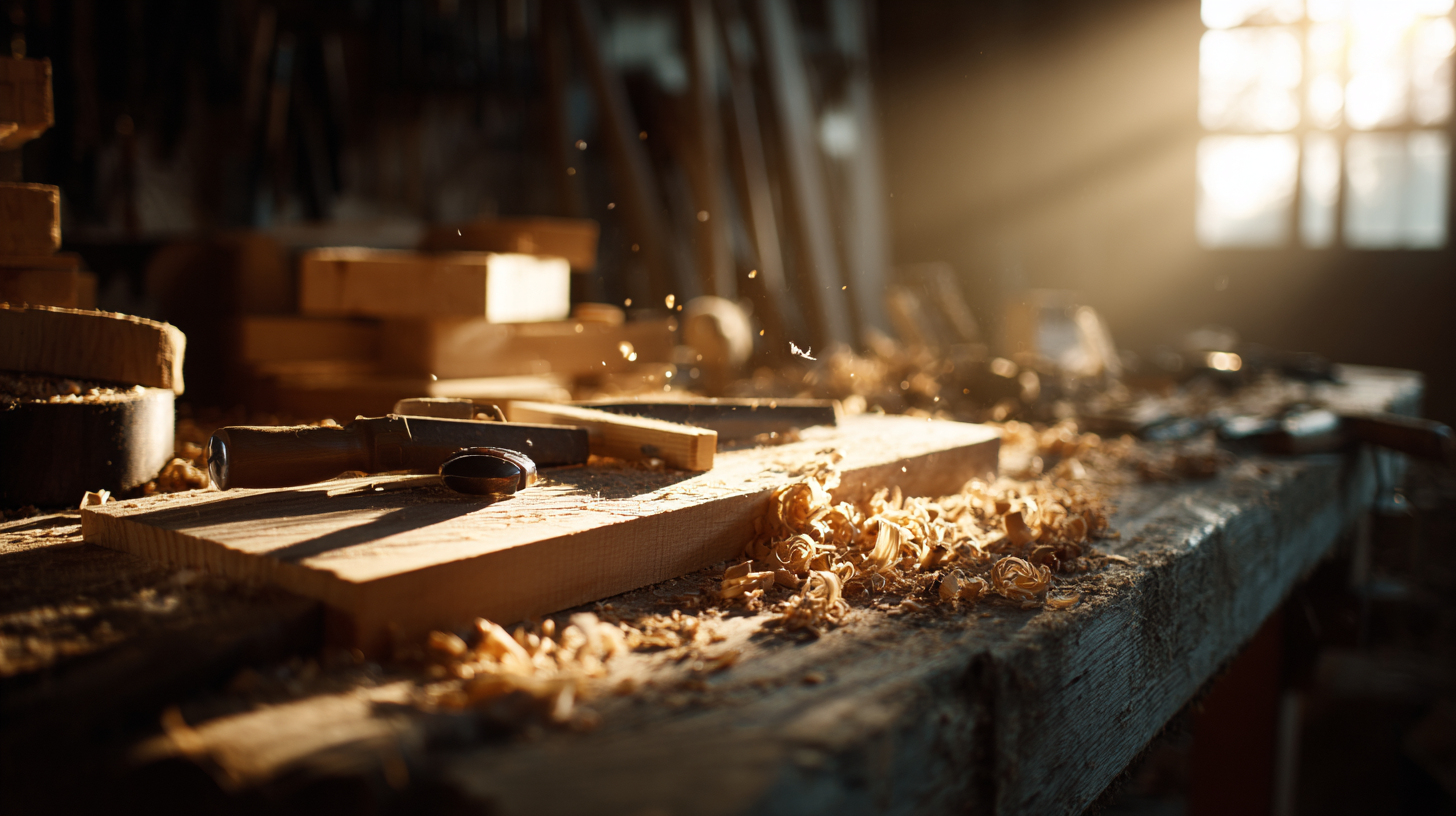
You can buy a table today that arrives in a box, requires an Allen wrench, and will live exactly as long as your patience during assembly, which is to say, not long. Or, you can make a table. Not a perfect table. Not a fast table. A slightly uneven, questionably stained, possibly leaning table that you built with your own two hands while wondering at several points whether you’ve made a huge mistake. And yet, that table will be better. Not because it is objectively better, but because it contains something no factory can mass-produce: your time, your attention, your small moments of frustration, your quiet pride when it finally stands without wobbling like a newborn deer.
For a long time, we’ve treated efficiency as the ultimate goal. Faster is better. Cheaper is better. Scalable is better. But human beings don’t actually love efficiency. Sure, we tolerate it. We rely on it. We need it. But what we love is meaning. We love the story behind a thing. We love the fact that someone cared enough to make it slowly. We love the imperfections that remind us a human being was here.
And here’s where AI gets interesting.
If AI can handle the emails, the scheduling, the formatting, the data entry, the things we do not wake up excited to do, it creates a vacuum. And into that vacuum, something very old might return. Hands. Woodworking. Pottery. Painting. Writing, not because we have to, but because we want to. Building things from scratch, even when there are easier ways to get them, because the act of building becomes the point.
A future where the most valuable objects are not the ones produced at scale, but the ones touched by a person. A chair that someone shaped. A bowl that someone spun. A story that someone told in their own voice, with all its quirks and contradictions intact.
We may find ourselves in a world where “handmade” is not a niche Etsy filter, but a marker of something rare and meaningful. Where the phrase “I made this” carries more weight than “I bought this.” Where craftsmanship becomes not a relic of the past, but a response to the present.
And yes, it will likely be augmented. Of course it will. We’ll use AI to sketch designs, to learn techniques, to troubleshoot when we accidentally glue our fingers together, which will happen more than we’d like to admit. But the core of it, the soul of it, will still be ours.
Because creativity isn’t just about output. It’s about process. It’s about the strange, meandering path from idea to object. It’s about the part of your brain that lights up when you make something that didn’t exist before. AI can assist that process. It can accelerate parts of it. It can remove friction. But it cannot replace the feeling of sanding down a rough edge until it’s smooth. Of stepping back and seeing something take shape. Of knowing, in a very quiet and satisfying way, that you made a thing.
So maybe the question isn’t what AI will take from us. Maybe the question is what it will give back.
What can we accomplish when we are no longer buried in the mundane? What can we build when our time is our own again? What can we craft when we remember that making something, anything, is one of the most fundamentally human things we do?
Because somewhere, a caveman is still complaining about the wheel.
“Once you let circles do the work,” he grunts, “people forget how to carry things.”
And sure, we did. We stopped dragging. We got efficient. We let the wheel handle the load. But that was the point. Once we didn’t have to carry everything, we could finally start making things. The wheel didn’t kill craftsmanship. It made room for it. And maybe AI does the same.