The Rise of Firelight
Last year, like many responsible adults navigating modern life, marriage, parenthood, democracy, and the general collapse of civilized discourse, I started using artificial intelligence to make incredibly stupid songs.
This began innocently enough. I was experimenting with Suno, mostly trying to create songs that would make my wife and kids laugh. I was not, at that point, trying to become the Brian Wilson of fake country bands. I was simply a grown man typing ridiculous prompts into a machine and seeing what came back. One of the early masterpieces was called “I Take My Shirt Off, When I Poop,” which, as the title suggests, is exactly the kind of sophisticated family entertainment future historians will cite when explaining why Western civilization finally gave up.
But underneath the dumb songs, something else was happening.
I had become increasingly frustrated with the current presidential administration, Congress, the Supreme Court, and the way American public life seemed to be eating itself alive in real time. I needed some kind of outlet. Some people go for long walks. Some people meditate. Some people write op-eds. Apparently, I create fictional country bands.
The first idea was simple. What if I made an album that had catchy, likable, modern country songs, but sprinkled in a few tracks about why the MAGA movement is, to put it gently, not exactly helping society flourish? Since Trump supporters tend to overlap with country music audiences, modern country might seem like an interesting Trojan horse. A way to sneak a little cultural commentary into a format that felt approachable, melodic, and familiar.
So I invented a band.
I called it Firelight Union. I created a fake backstory. I created a fake image of the band. I imagined who these imaginary musicians were, where they came from, what they sounded like, what kind of bars they played, and what kind of denim they probably wore. Then I started writing and generating songs.
The strange thing is, I did not really listen to country music. I did not especially enjoy country music. I had nothing against it; I just was not a country guy. I was more likely to reach for jam bands, yacht rock, jazz, classic rock, singer-songwriters, or whatever category of music includes songs that sound best while driving slightly too fast while trying to make it to your kids’ school in time for pick-up.
But the deeper I got into Firelight Union, the more invested I became.
What started as a political experiment became something more personal and much stranger. I found myself constantly tweaking lyrics, adjusting melodies, changing instrumentation, reworking choruses, changing the energy of a bridge, pushing a vocal take in a different direction, or trying to get a guitar line to feel more like something a band would actually play in a room. I was not just prompting a machine and walking away. I was producing, editing, arranging, rewriting, obsessing, and occasionally questioning whether I had lost my mind.
Eventually, Firelight Union’s first self-titled album came together.
Was it a hit? No. Nashville did not call. Rolling Stone did not assign a 9,000-word profile. No one approached me in a parking lot and said, “Are you the guy behind that fake band my cousin won’t stop talking about?” But something unexpected happened. People listened. Friends shared the songs. Some put Firelight Union tracks on their playlists. People on both sides of the political aisle seemed to enjoy it, which surprised me, since the whole thing had started as a mildly subversive act of musical mischief.
And then the listening numbers started to climb.
Not wildly. Not in a “buy a ranch and become insufferable” kind of way. But enough that I began to realize Firelight Union had become more than a joke. It had become a project. A weird little creative world. A fake band with real songs.
Once the first album was squared away, I had another thought, because apparently I am not someone who leaves well enough alone.
Could I make a live album?
Surely, I thought, a band with no human singers, no human drummer, no human guitarist, no human bassist, no tour bus, no bar tab, no tragic internal feud, and no one named Travis could not convincingly make a live album.
But that question was too good to ignore.
I had decades of lyrics I had written sitting around, some in notebooks, some in files, some buried in the weird mental junk drawer where old song ideas go to become intrusive thoughts. I had melodies I had hummed to myself for years. I had bits and pieces I had written on the piano. Some of them were probably begging to become songs. Others were perhaps politely asking to remain private forever. But either way, they were there.
So last summer, I started working on Firelight Union’s first live album.
This time, the project shifted. The political edge mostly receded. There are still traces of it, especially in “Golden Crossroads,” which wanders into that territory, but the live album became less about politics and more about songs, memory, love, storytelling, and the strange joy of finally getting ideas out of my head and into the world.
And because I am only marginally talented at the piano and trumpet, and very much not a singer, I used every tool I could get my hands on. Suno. Adobe Audition. Logic Pro. GarageBand. Physical recording. Actual playing. Editing. Layering. Reworking. Rebuilding. Trying again. Then, trying again because the last try sounded like a wedding band falling down a staircase.
What could have been a quick AI experiment turned into something that took almost a year to finish.
That part surprised me most. People often talk about AI creativity as if you could press a button and a finished product would appear. Sometimes that is true. But this album was not that. This was a long, strange, obsessive process of shaping raw material into something that felt alive. AI helped me do things I could not have done alone. It gave me a band I did not have. It gave me singers I could not be. It gave me a way to hear arrangements that had previously existed only as half-formed melodies in the deep recesses of my mind.
But the focus of the album, the intention, the emotional center, the lyrics, the melodies, the choices, the absurd level of tinkering, that came from me.
And somewhere along the way, this fake band started to feel weirdly real.
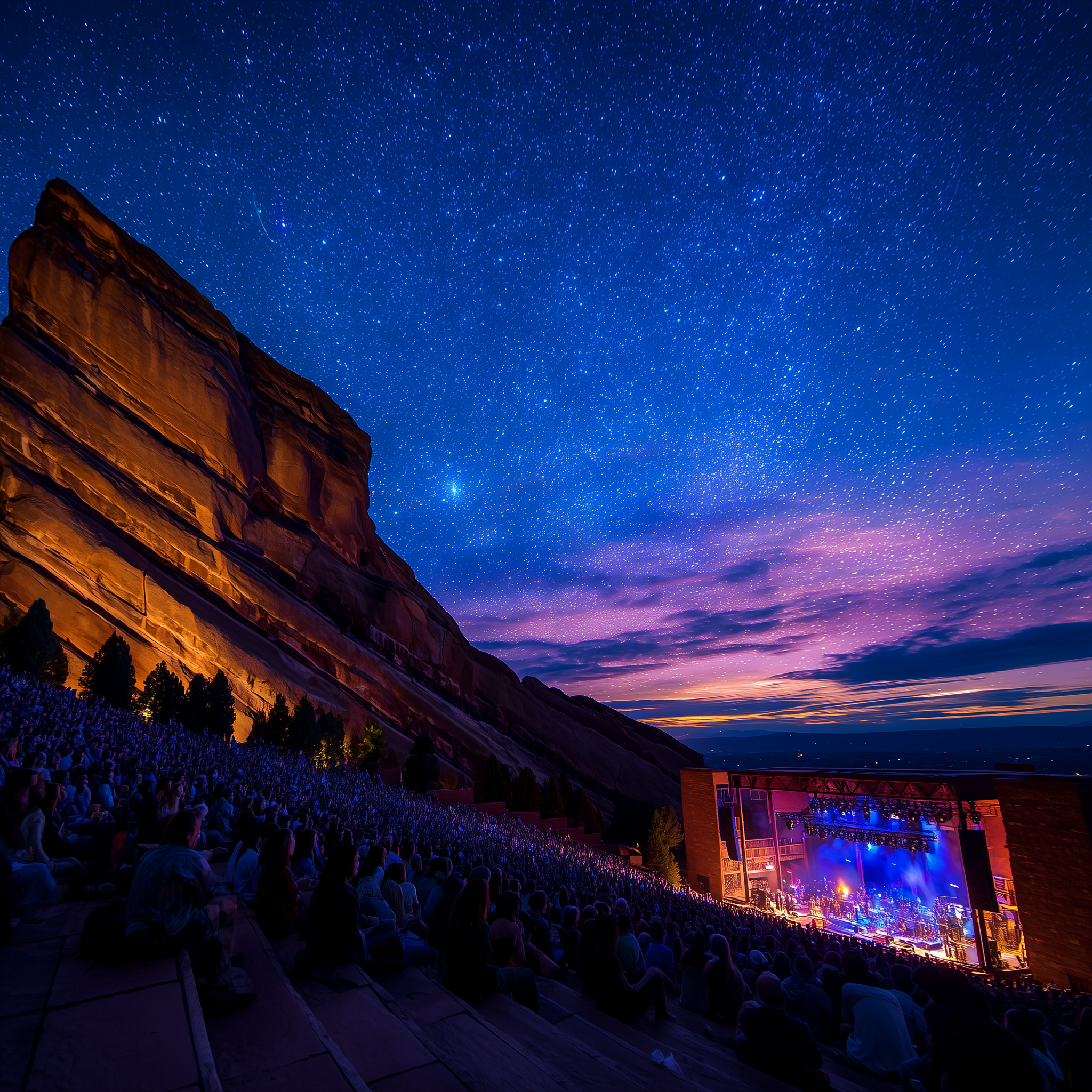
The live album gave me a chance to revisit some earlier Firelight Union songs and put them in a bigger, warmer, more human-feeling space. “Stars Like That,” probably the closest thing Firelight Union had to a “hit” from the first album, gets the full live band treatment here. It opens up in a way that makes it feel like it was always meant to be played under stage lights in front of people holding plastic cups and making poor parking decisions.
Then there are the songs from earlier parts of my life.
“Falling Hard in New York” is about falling in love with Lindsey while walking the streets of New York. That one is personal in a way I probably did not fully appreciate until I heard it performed by this imaginary band. It has the feeling of memory turning itself into melody, which is a deeply pretentious thing to say, but also true.
“A&P” is based on John Updike’s short story of the same name, because apparently, even my fake country band has a high school English curriculum phase. I loved the idea of taking that small, loaded moment from the story and turning it into something musical, something that feels both ordinary and mythic, which is what good short fiction often does.
“Fake Smile” is a biting look at influencers and how they are helping to ruin the culture, one ring light at a time. I realize that complaining about influencers while using AI to create a fake country band is a morally complicated position, but art is full of contradictions, and I also contain multitudes.
“Malin” is a jazz-inspired instrumental I banged out on the keys, then used AI to expand it into a full-band song. There is something especially satisfying about that one because it began physically, with my hands on the piano, and then turned into something much larger than what I could have played myself. It’s probably also a credit to my time spent in my high school jazz ensemble.
“Carolina Light” is a romantic song about love in the Outer Banks. It has that windswept feeling I love, the sense of being somewhere beautiful with someone you love and hoping, against all available evidence, that time might briefly agree to stop being such a jerk.
And then there is “The River Won’t Tell,” which is probably the darkest song on the album. It is haunting, strange, and built around the story of a man who may or may not have drowned his true love in a river. So, you know, light summer listening. Every album needs at least one song that makes people wonder if they should call someone.
What I love about this whole project is that it started as a joke, became an experiment, turned into a political outlet, and then slowly evolved into something more generous, more musical, and more personal. It became a way to rescue old lyrics and melodies from oblivion. It became a way to collaborate with tools that did not exist when I first started writing songs. It became a way to hear versions of songs I could never have made myself.

And it made me appreciate country music.
I did not see that coming.
I still do not know if I am a “country fan” in the traditional sense. I do not own boots. I do not understand pickup truck culture. I have never looked at a field and thought, “This needs more heartfelt fiddle.” But making Firelight Union opened up something for me. It reminded me that country music, at its best, is storytelling. It is memory. It is regret, love, humor, longing, place, family, bad decisions, and the occasional murder ballad. In other words, it is exactly the kind of music a fake band made by a real person might accidentally fall in love with.
So that is why I created Firelight Union.
Because I needed an outlet. Because I wanted to make people laugh. Because I was frustrated. Because I had songs in my head that had been waiting for years to escape. Because technology made it possible to turn fragments into something fuller. Because fake things can still carry real feelings. Because imaginary people can sometimes play very real songs.
And because, somehow, a guy who never really liked country music made a country album.
Listen to it. (Apple Music, Spotify, YouTube) Give it a chance. Firelight Union may not be real, but the songs are.
And who knows, it just might make you a country fan after all.