The Distance Between Strangers
He could have been in his 70s or 80s, though cancer has a way of aging you quickly, so he may have been in his 60s. But he stood there, on the side of Route 6 in Truro, MA, alone and in the bright morning sunlight. In one hand, he held a sign. He used the other to slowly, silently, and repeatedly press his fist into his heart. The handwritten sign said, “Thank You for Caring About Me.”
And that was all it took. I melted down. Tears in my eyes. Not from the stress of the past two days, not for the popped tires, forgotten bike shoes, or lack of sleep. It was seeing this man, standing stoically there, thanking each and every Pan-Mass Challenge rider who passed him on their way to Provincetown.
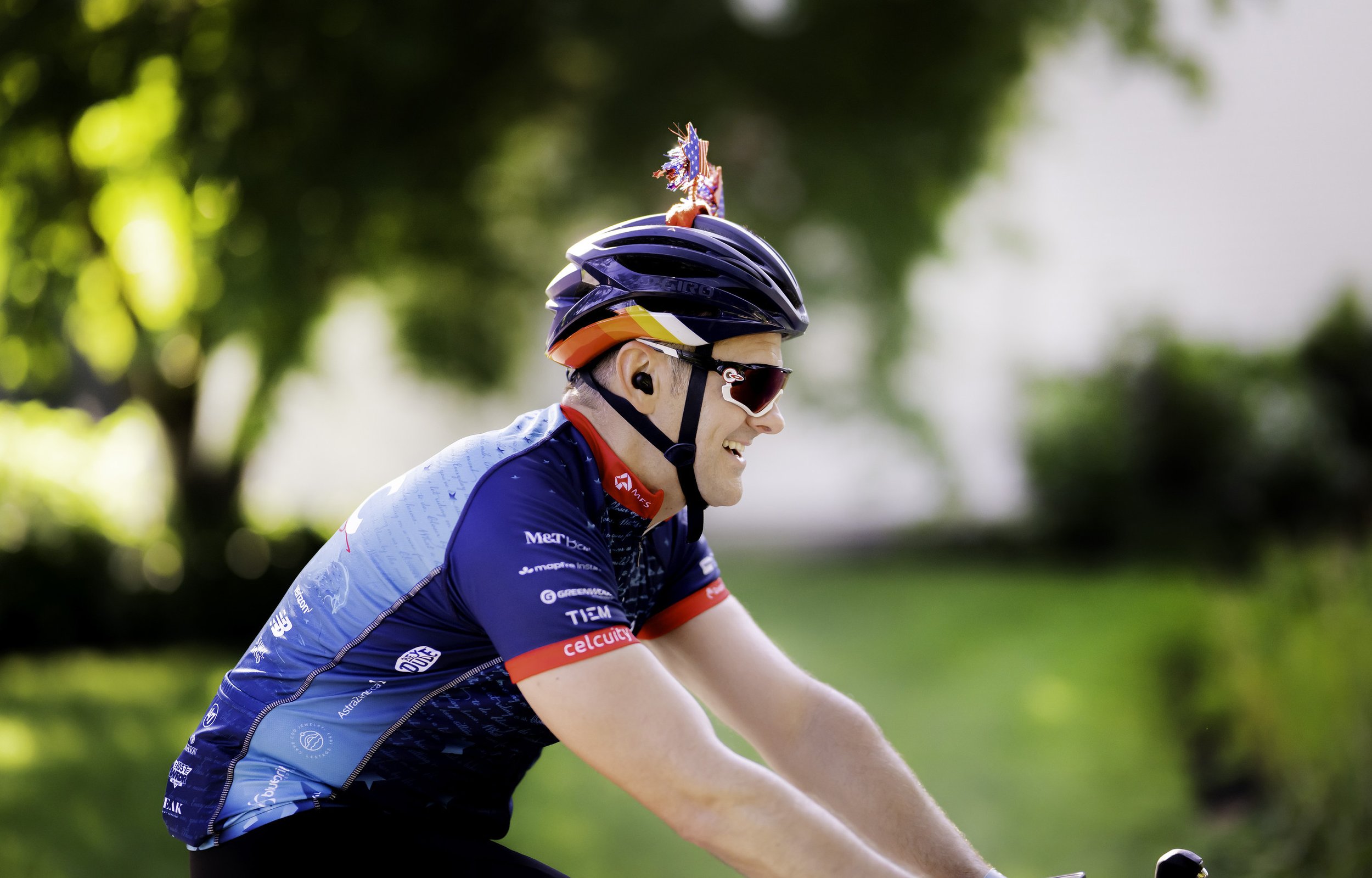
On Pan-Mass Challenge weekend, riders are often asked why they do it. I’ve fallen into the routine of giving my stock answer of “too many of my friends and families have suffered with the disease, and I couldn’t sit idly by and not do something about it.” The statement is true. The feelings behind it are true. But it doesn’t paint the whole picture of why I ride. Nor, I’m guessing, is it why most people partake in the event.
I ride for the strangers. For the kids in the hospitals who I’ll never know, but who I hope are cured of the disease. I ride for the memories of the unknown faces in laminated photographs stuck to the back of cycling jerseys along the route. I ride because I hope that we can find a cure for cancer, and that, perhaps, my fundraising might help someone I’ve never met.
And maybe that is part of what the Pan-Mass Challenge offers us, beyond the money raised and the miles ridden. It is a reminder that we are responsible for people we may never meet.
We live in a society that increasingly tells us to look inward. Protect what is yours. Get ahead. Make sure you get your share before someone else gets theirs. We measure our lives by what we own, what we earn, and how much more we have than the person standing next to us. Somewhere along the way, self-reliance became selfishness, and ambition became an excuse to stop caring about anyone outside our immediate circle.
That way of thinking has left us morally bankrupt.
A cancer diagnosis has a way of stripping all of that away. Whether it belongs to you, your child, your spouse, your parent, or your friend, suddenly none of those divisions matter. Your politics do not matter. Your income does not matter. Your address, your job title, and the size of your house do not matter. You are simply a human being who is frightened, vulnerable, and hoping that someone, somewhere, cares enough to help.
That is what charity can do at its best. It asks us to look beyond ourselves. It allows those who have more to help those who have less. It gives people access to treatment, support, and hope that should never depend on the circumstances of their birth. It levels a playing field that life has never made level on its own.
We should not need cancer to remind us of our shared humanity. We should not need tragedy before we decide to care about strangers. We should not have to see a man standing alone on Route 6, pressing his fist against his heart, to understand that we owe something to one another.
That man in Truro was thanking us for caring about him.
But the truth is, he gave us something in return.
He reminded us that caring about one another is not an act of extraordinary kindness. It is the bare minimum of being human.