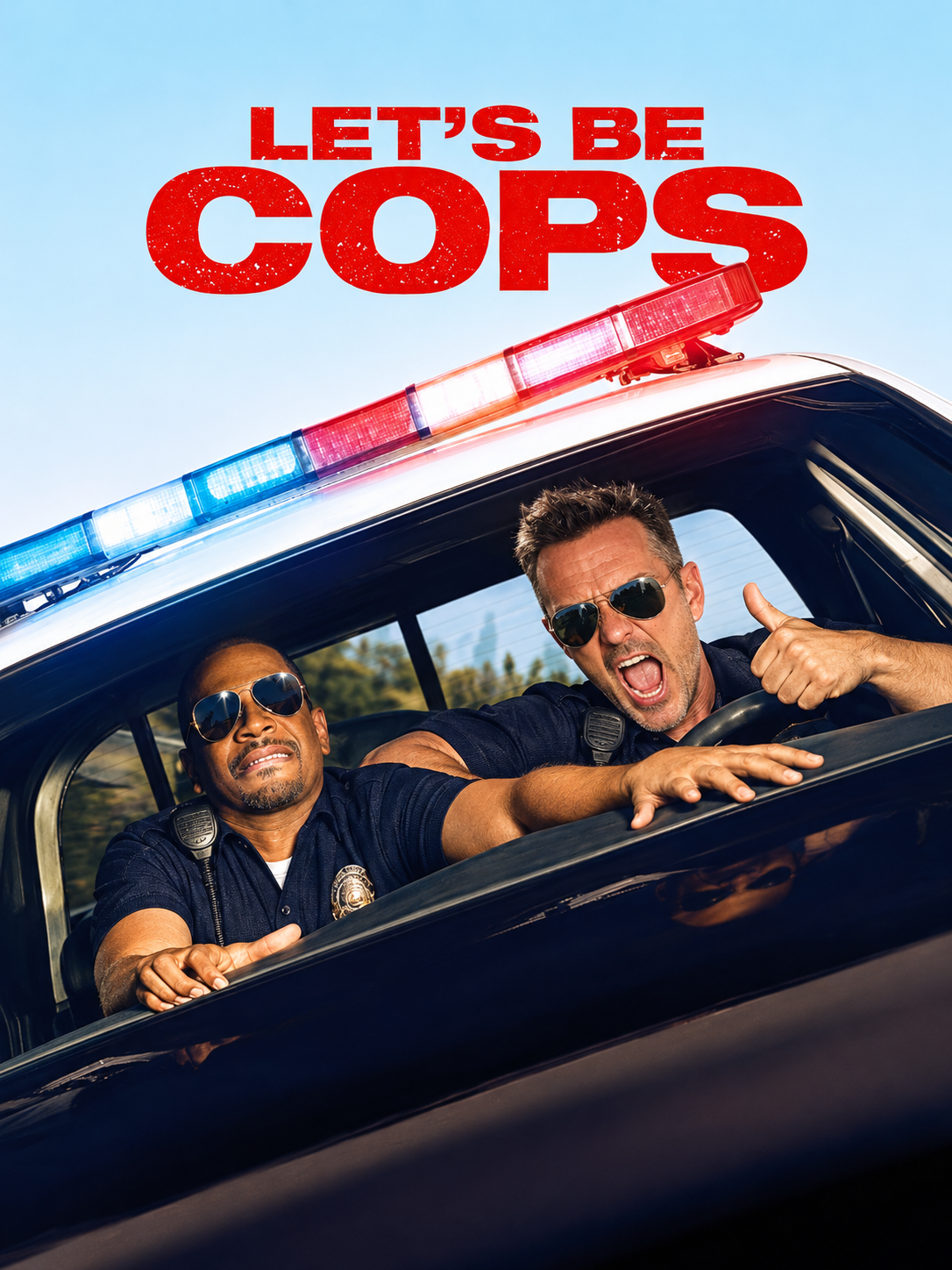
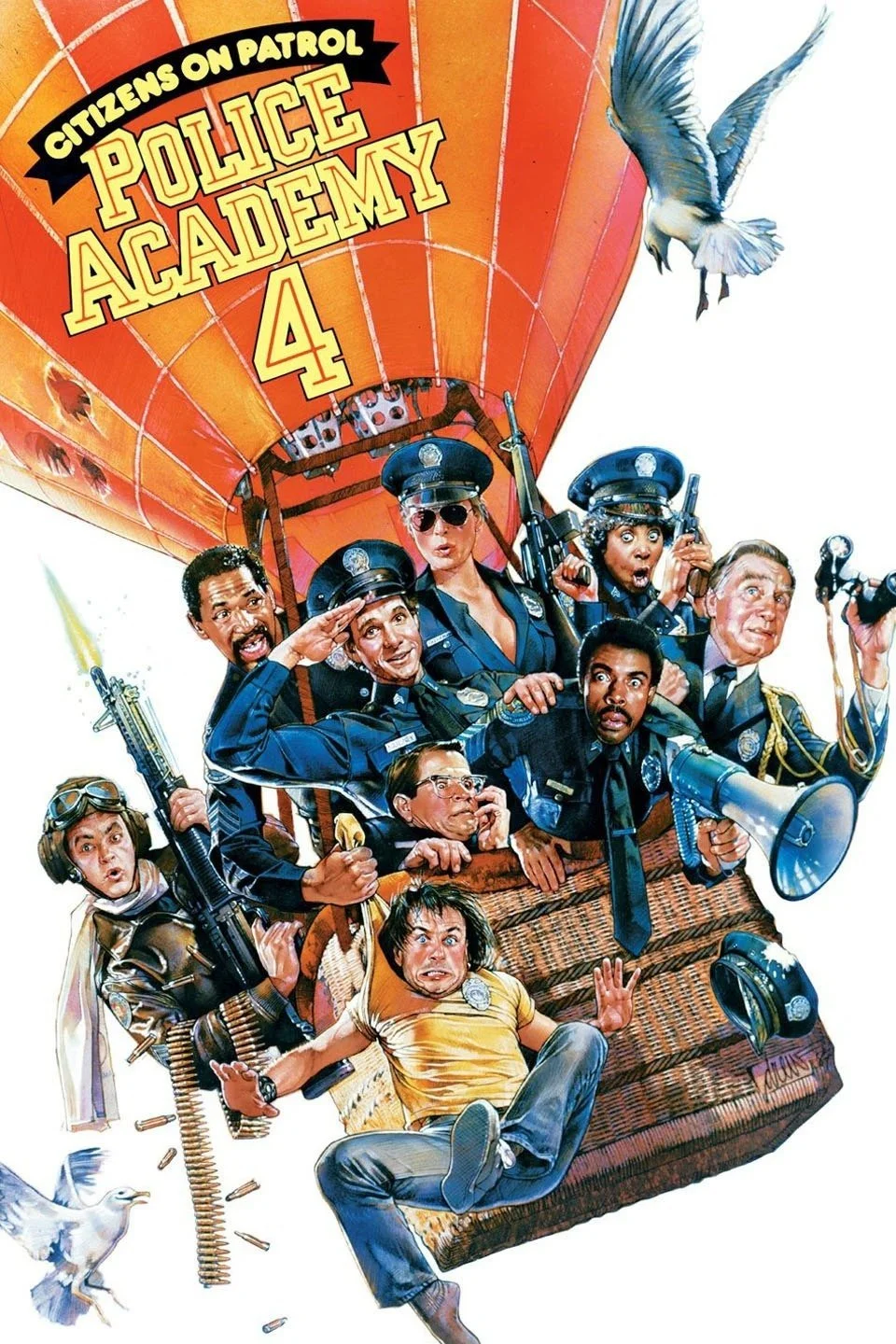
My uncle’s father was a sergeant in the Bethlehem, Pennsylvania, Police Department. When my brother, Eric, and I were young, he took us to the precinct, showed us around, let us sit in a jail cell, and gave us two kid-sized police hats when we left. That was all it took. Soon, Eric and I were writing fake tickets to friends who didn’t park their big wheels properly on the side of the driveway, busting Mom and Dad for not wearing their seatbelts, and pretending to call for backup when we were forced to eat broccoli at dinner. This was in the early to mid-80s, when shows like Hill Street Blues and Miami Vice showed us just how noble a profession law enforcement was.
Then, of course, came the 90s, and those rose-colored glasses came off when songs like “Fuck Tha Police” and “Cop Killer” were played by friends’ older brothers on newly purchased CD players. (Yes, the irony of a bunch of white middle-class kids in suburban Connecticut listening to and attempting to understand the lyrics to songs shaped in places like South Central is not lost on me) And, of course, the Rodney King incident and Mark Fuhrman’s handling of the OJ Simpson case made our young and impressionable minds begin to question if the cops were actually the good guys.
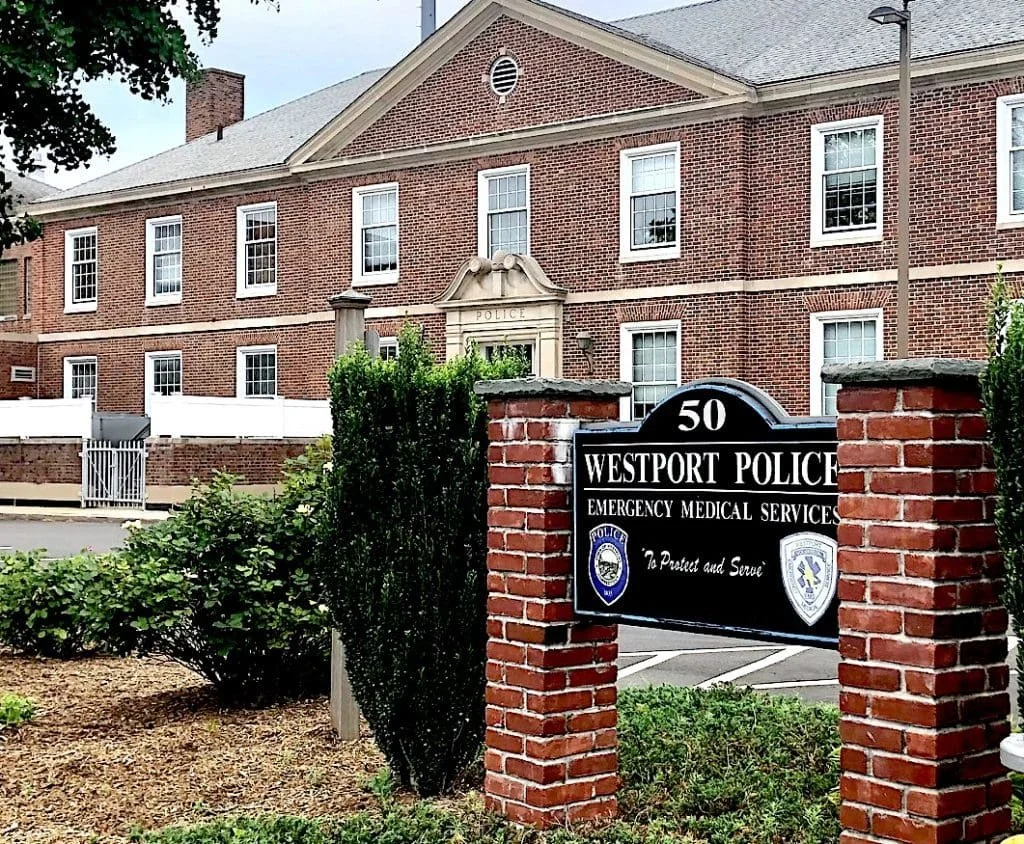
And so, my relationship with law enforcement has always been in flux. And while I’ve never been pulled over for anything more than a few traffic violations, my interaction with police officers has been limited. In fact, I’d go so far as to say that movies, television shows, and unfavorable news coverage had shaped my view of police to the point that I wasn’t sure where my opinions of police stood. So when the opportunity came to enroll in the Westport Police Department’s Citizen Police Academy, I was interested. Perhaps it would fill in some gaps. Perhaps I’d get a detailed view of how police departments work day to day. Perhaps I’d change assumptions into facts.
As it turns out, nine weeks is a pretty good start.
For those unfamiliar with it (and I suspect that includes a good number of Westport residents), the Citizens’ Police Academy is a program offered by the Westport Police Department that gives a small group of residents an inside look at how the department operates. Over nine weeks, participants learn about everything from patrol operations and criminal investigations to emergency response, the criminal justice system, and the various specialized units that make up a modern police department.
And no, despite what the name might suggest, and how much it would please my five-year-old self, you don't graduate with a badge, a gun, or the authority to pull over someone who blows through a stop sign on the Post Road.
What you do get is something considerably more valuable: access. Access to the men and women who serve our town. Access to the equipment, training, and procedures they rely on. And, perhaps most importantly, access to conversations that most of us would otherwise never have.
Like most things, it's easy to form opinions about policing from a distance. We see a troubling video on the news, hear about a controversial arrest, read about misconduct somewhere in the country, and begin assembling a picture of what law enforcement looks like. And, to be fair, some of those concerns are absolutely justified. There have been serious failures in policing in America, and pretending otherwise does a disservice to the public and to the many officers who take their responsibilities seriously.
But what we rarely see are the thousands of ordinary decisions that police officers make every day. Decisions that require patience, judgment, restraint, compassion, and occasionally the ability to deal with people who are having what might be the worst day of their lives.
That's a much more complicated job than the one I grew up watching on television. And complexity, I've learned, is something that's difficult to appreciate until you're invited to look behind the curtain.
One of the most valuable things about the academy was the opportunity to see police officers as people rather than as an institution. During one session, we were taken through how traffic stops work, and I was struck by how ballsy a cop has to be to approach a mostly unknown vehicle in the dark, not knowing who or what is in the car. Sure, cops try to reduce the variables before approaching a car, but the element of the unknown remains.
We tend to discuss the police department as a single entity. We talk about staffing, budgets, response times, enforcement, and public safety. We debate what the department should or shouldn't be doing. We hold it accountable, as we should. But behind those discussions are real people. People with families, personalities, senses of humor, and a genuine interest in the community in which they work. People who have chosen a profession that can be physically dangerous, emotionally exhausting, and subject to enormous public scrutiny.
And I found myself developing a real appreciation for the preparation and responsibility that go into doing that job well.
Now, I should acknowledge something else here.
As a member of Westport's Representative Town Meeting, I probably should have understood all this better before enrolling. The RTM is, after all, one of the bodies responsible for overseeing the town's finances and making decisions that affect the services our residents depend on. We discuss appropriations, examine expenditures, question priorities, and occasionally debate the merits of things we may not fully understand.
I don't say that as a criticism of my fellow RTM members. It's simply the nature of municipal government. There is an enormous amount to learn about how a town operates, and most of us are trying to develop that understanding while balancing careers, families, and the everyday responsibilities of life. But there's a difference between understanding a department on paper and understanding what the people in that department actually do.
A budget can tell you how much something costs. It can't always tell you what something is worth.
And while no nine-week course is going to turn me into an expert on policing, I do believe the experience has made me a more informed member of the RTM. I have a better appreciation for the demands placed on the department, the range of situations officers are expected to handle, and the amount of work that goes into maintaining the public safety we so often take for granted.
To be clear, the experience didn't convince me that police officers are infallible, that every decision is the right one, or that questioning law enforcement is wrong. No, I believe that meaningful accountability is only possible when it's accompanied by meaningful understanding. It's difficult to ask well-thought-out questions about an institution if you don't understand how that institution operates. And it's equally difficult to build trust when the only interactions between the public and the police occur during moments of stress, conflict, or crisis.
That's why I think programs like the Citizens' Police Academy are so vital to our community. They don't ask residents to abandon their skepticism. They invite them to replace assumptions with firsthand experience.
We live in an age when nearly every issue is filtered through politics, social media, and competing narratives. We've become remarkably comfortable forming strong opinions about things we have very little personal experience with. I know I’m guilty of this every day. But increasingly, we seem more interested in confirming what we already believe than discovering what we don't know.
The Citizens' Police Academy offers an antidote to some of that. It puts people in a room together, encourages questions, and gives residents an opportunity to learn directly from the people doing the work. In a very real sense, it is an exercise in civic engagement.
Which brings me to my one disappointment with the program: I wish more people in Westport knew about it.
The academy is limited to around 25 participants each year. I understand why. It's a substantial commitment of time and resources for the department, along with Capt. Cabana, who puts the class together, runs it, and makes some of the best baked goods I’ve ever had. But the small class size is undoubtedly part of what makes the experience so worthwhile.
Thousands of Westport residents might benefit from an opportunity like this. People who are naturally supportive of law enforcement. People who are skeptical of it. Young adults just beginning to think about the responsibilities of citizenship. Longtime residents who have lived here for decades without ever having a meaningful conversation with a police officer. And yes, people who serve on the RTM, the Board of Finance, and other town bodies who are charged with making decisions about the departments that serve our community.
I wish we could find ways to make this kind of experience available to more residents, whether through expanded programming, additional community events, or simply greater awareness of the opportunities that already exist. Because I think the value extends well beyond the police department.
Westport is fortunate to have an extraordinary collection of public servants. Police officers, firefighters, EMTs, teachers, public works employees, and countless others whose work makes our daily lives possible. Most of us know remarkably little about what their jobs actually entail. We know they're there. We expect them to be there. And, understandably, we tend to notice them most when something goes wrong.
But how often do we make the effort to understand what they do when things are going right? How often do we stop to consider the training, preparation, judgment, and personal commitment required to make a community function? And will our conversations about local government change if more of us did? (Quick note: as of this writing, no one in the Westport Police Department lives in Westport. These are people who are literally putting their lives on the line to improve a town they don’t even live in.)
I don't have all the answers. In fact, after nine weeks at the Citizens' Police Academy, I'm fairly certain I have more questions than when I started. But they're better questions now. More informed questions. I also have a much greater appreciation for the men and women of the Westport Police Department, who opened their doors, shared their knowledge, answered our questions, and gave us a glimpse into a world most of us only know from a distance. (Also, I wonder why anyone would commit a crime and think they’d get away with it. My god, are these folks good at their jobs?)
To Capt. Cabana and everyone involved in making the academy possible, thank you. You've created something genuinely valuable for this community, and I hope it keeps growing.
As for me, I don't know that I've come full circle from those childhood days of writing tickets to neighborhood kids and calling for backup at the dinner table. The world is more complicated than it appeared from beneath a plastic police hat in 1983.
But I have rediscovered a measure of the admiration I felt back then. Not because I now believe police officers are the larger-than-life heroes I once watched on television, but because I've come to appreciate something far more meaningful.
They're people. Ordinary people who have chosen to take on an extraordinary responsibility.
And I think they're worth getting to know. I certainly feel fortunate that I had the chance.